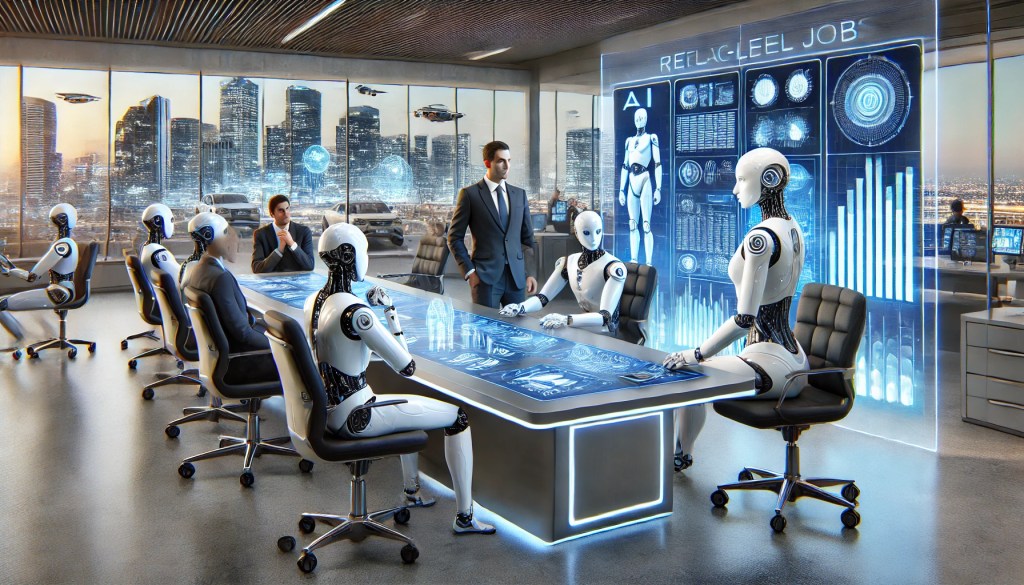
As technology continues to evolve at an unprecedented pace, the rise of artificial intelligence (AI) presents both exciting opportunities and significant challenges. One of the most pressing questions of our time is: What happens when AI replaces high-level jobs? In this blog post, we’ll explore the effects of AI on the job market, the ethical considerations involved, and how businesses and individuals can adapt to this transformative landscape.
Understanding the Current AI Landscape
Before diving into the potential repercussions of AI replacing high-level jobs, it’s crucial to understand the advancements in AI technology. AI systems are designed to perform tasks traditionally requiring human intelligence, such as problem-solving, decision-making, and even creative thinking. From machine learning to natural language processing, the capabilities of AI are growing rapidly.
According to a report from McKinsey, 70% of organizations are expected to adopt at least one type of AI technology by 2030. This sheds light on the urgency for industries to prepare for an AI-driven future. But what does this mean for high-level positions?
The Economic Perspective: Benefits and Risks
When we discuss what happens when AI replaces high-level jobs, we must consider both the economic benefits and risks involved.
Increased Efficiency and Productivity
One of the most significant benefits of AI adoption is increased efficiency. AI can process vast amounts of data at a speed unimaginable for humans, leading to faster decision-making and improved productivity. For example, financial institutions use AI algorithms to analyze market trends and manage portfolios more effectively. Companies can save time and reduce costs, ultimately improving their bottom line.
Job Displacement vs. Job Transformation
Despite the efficiency gains, a key concern remains: job displacement. High-level positions—like those in management, finance, and even creative fields—are at risk. When AI systems take over routine tasks, the roles of professionals may become redundant. A report by PwC predicts that up to 30% of jobs may be automated by the early 2030s.
However, it’s not all doom and gloom. As AI displaces some high-level jobs, it will also create new roles that require human intuition and creativity. Jobs in AI oversight, data analysis, and cybersecurity will likely increase in demand. The emergence of new positions may offset some job losses, but the transition may not be seamless.
The Skills Gap
As AI continues to evolve, a significant skills gap is becoming evident. Professionals must adapt to the changing landscape by acquiring new skills that AI cannot replicate. Skills such as emotional intelligence, critical thinking, and strategic decision-making will likely see increased demand.
Internal and External Links on Economic Impact
For further insights, you can check out these authoritative sources:
- McKinsey’s report on the Future of Work: McKinsey Report
- PwC’s automation report: PwC Report
Ethical Considerations: The Human Element
As we explore the question “what happens when AI replaces high-level jobs?”, the ethical implications must also be considered.
A Loss of Human Touch
AI may excel in data analysis and process optimization, but it lacks the human touch—emotion, empathy, and ethical judgment. In roles such as management or healthcare, the inability of AI to understand human emotions can reduce the quality of interpersonal relations.
Bias in AI Decision-Making
AI systems learn from existing data, which can inadvertently contain biases. If high-level jobs become reliant on automated decisions, these biases can perpetuate discriminatory practices. Organizations must be cautious about their AI systems and ensure they implement fairness protocols.
Internal and External Links on Ethical Implications
To gain a deeper understanding of the ethical implications of AI, consider these resources:
- The Ethics of Artificial Intelligence: Stanford University
- Bias in AI: Harvard Business Review
Preparing for an AI-Driven Future
With the undeniable shift toward AI, organizations and professionals must proactively prepare.
Upskilling and Reskilling
Continuous learning is crucial for professionals facing job displacement or transformation in their roles. Online courses in machine learning, data analytics, and leadership can be invaluable. Platforms like Coursera and edX offer tailored programs to help individuals pivot.
Workforce Strategies for Organizations
Businesses must foster a culture of adaptability. By investing in employee training and career development, organizations can better equip their workforce to embrace AI technology. Collaborative efforts between employees and AI systems can drive innovation and create a comfortable transition for staff moving into new roles.
Conclusion
As we navigate the waters of AI’s impact on high-level jobs, the overarching theme is one of adaptation and foresight. What happens when AI replaces high-level jobs? While some positions may become obsolete, new opportunities will arise that emphasize human qualities. The challenge lies in ensuring that employees are prepared and equipped with the necessary skills to thrive in this AI-driven era.
Investing in education, focusing on ethical considerations, and fostering adaptable strategies will define the future of work in an increasingly automated world. By understanding these changes, we can pave the way for a more harmonious coexistence between humans and AI technologies, ultimately enhancing productivity and innovation in the workforce.
Are you ready for the next chapter in the evolution of work? The proactive steps we take today can shape a better tomorrow!




 Stacbytes
Leave a comment